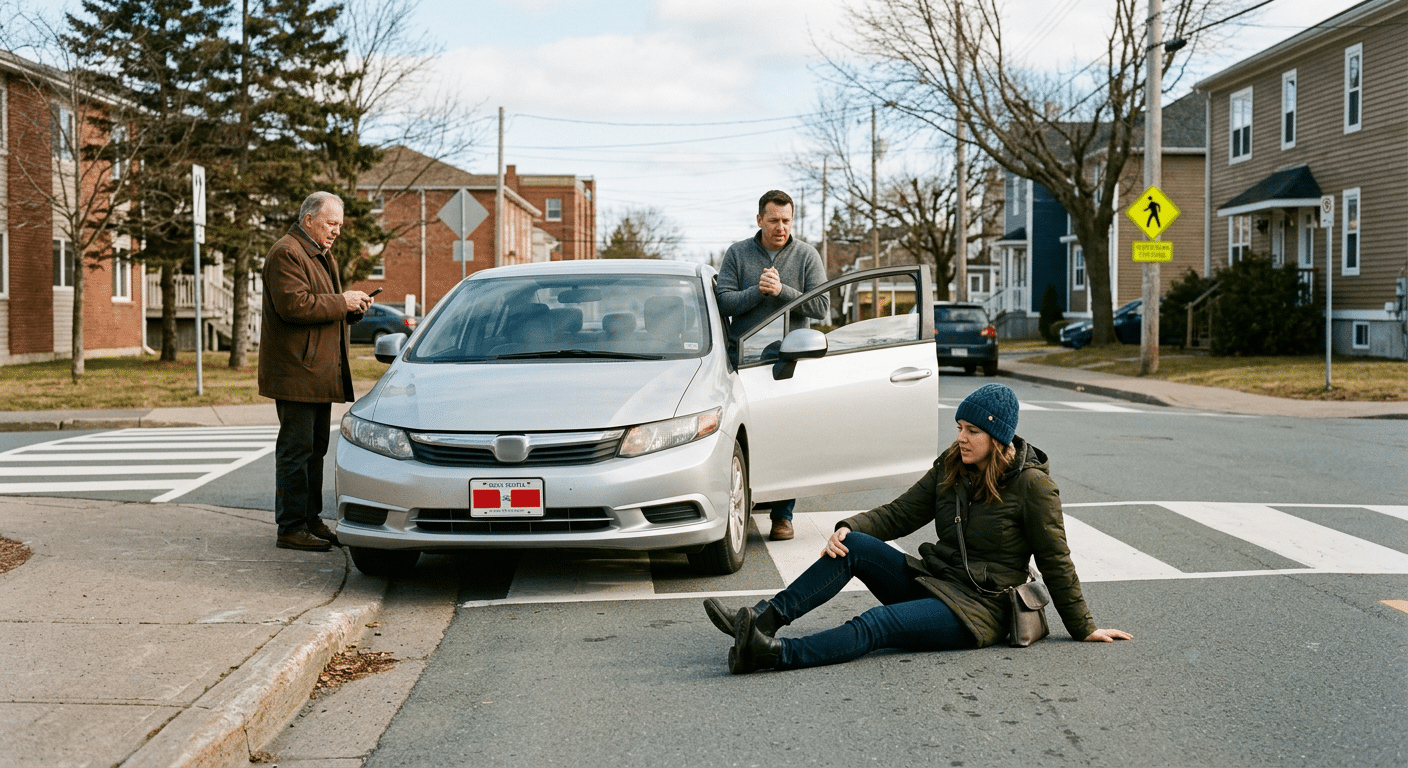
A person on foot has no protection in a collision with a vehicle. Even at low speed, a car striking a pedestrian can cause broken bones, spinal injuries, and traumatic brain injuries, and the consequences are often life-altering. If you or a loved one was hit by a vehicle while walking in Nova Scotia, you have rights, and understanding them early is one of the most important things you can do.
This article explains how fault is assessed, what benefits are available even if you do not own a car, and the steps that protect your ability to recover compensation.
Drivers owe pedestrians a high duty of care
Nova Scotia’s Motor Vehicle Act sets out the rules of the road, including the right of way at crosswalks. In general, a driver must yield to a pedestrian who is lawfully crossing at a marked or unmarked crosswalk. Drivers are also required to keep a proper lookout, slow down near schools and crossings, and drive at a speed that is reasonable for the conditions. Because a vehicle can do so much harm, the courts hold drivers to a high standard when it comes to watching for people on foot.
What if the pedestrian was partly at fault?
Fault is not always all-or-nothing. A pedestrian who crossed against a signal or stepped out mid-block may share some responsibility, and Nova Scotia’s contributory negligence rules allow a court to divide fault between the parties. Importantly, sharing some blame does not necessarily end a claim. If a driver was speeding, distracted, or failed to stop when they should have, they may still be largely responsible even if the pedestrian was not in a crosswalk. Each case turns on its own facts.
You may have accident benefits even without your own car
Many people are surprised to learn that a pedestrian struck by a vehicle can usually access no-fault accident benefits, known as Section B benefits, under an automobile insurance policy. These benefits are not based on who caused the crash. If you were hit by an insured vehicle, you may be able to claim medical and rehabilitation costs and income replacement through that vehicle’s policy, even if you do not own a car yourself. This can provide crucial early support while your recovery and any larger claim are underway.
Claiming against the at-fault driver
Beyond no-fault benefits, an injured pedestrian may be able to bring a claim against the driver who caused the collision. This is where compensation for pain and suffering, loss of future income, and the long-term costs of a serious injury are usually addressed. The strength of such a claim depends heavily on the evidence, which is why the steps you take in the hours and days after a crash matter so much.
Steps to take after being hit
If you are able, call for medical help right away and accept treatment even if you feel you can walk it off; some serious injuries, including brain injuries, are not obvious at first. Make sure the police are called so that an official report is created. Write down the driver’s name, licence plate, and insurance information, and get the contact details of any witnesses. If you can, photograph the scene, the vehicle, and your injuries. Keep records of every medical visit and expense. Finally, be careful about giving statements to an insurer before you understand your rights.
Compensation available to injured pedestrians
Depending on the injury, compensation may include medical and rehabilitation expenses, past and future lost income, the cost of attendant or home care, out-of-pocket costs, and damages for pain and suffering. Families who have lost a loved one in a pedestrian collision may also have a claim for their loss. Because these cases can involve significant long-term costs, careful documentation and experienced guidance make a real difference.
The team of lawyers at Diamond and Diamond have experience handling pedestrian accident claims in Nova Scotia. Call our 24/7 injury hotline at 1-800-567-HURT or visit diamondlaw-ns.ca to speak with someone now. We offer free consultations and case evaluations, and our lawyers represent injured people across Nova Scotia, from Halifax to Sydney, Yarmouth, and beyond.