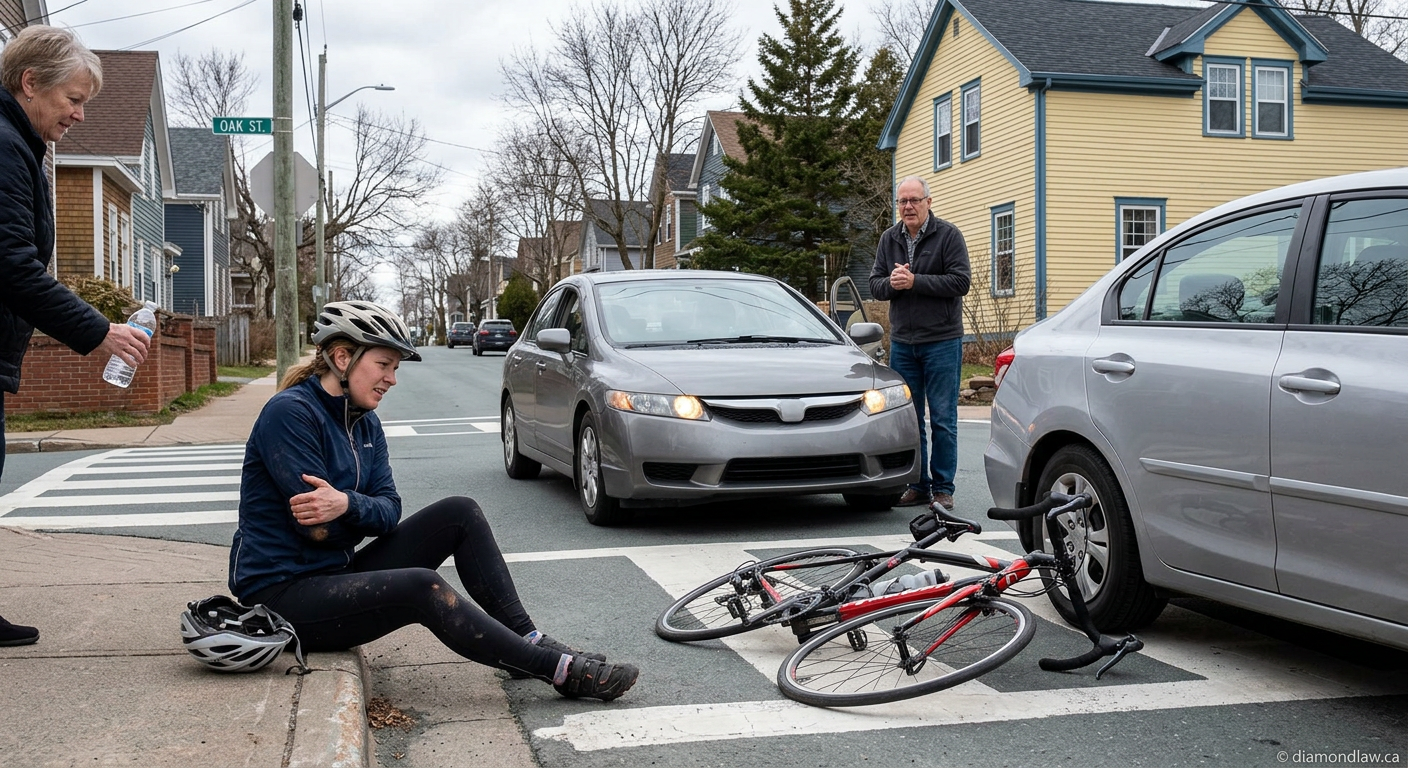
Cycling is a healthy, low-cost, and increasingly popular way to get around Nova Scotia, from Halifax bike lanes to quiet rural roads. But a bicycle offers little protection, and a collision with a vehicle can cause devastating injuries, including broken bones, spinal damage, and traumatic brain injuries. If you were hurt while cycling, you have legal options, and knowing them early can protect both your recovery and your claim.
This article explains your rights on the road, the benefits available after a crash, and the steps to take if a vehicle has struck you.
Cyclists have rights and responsibilities on the road
Under Nova Scotia’s Motor Vehicle Act, a bicycle is generally treated as a vehicle, which means cyclists have the right to use the road and drivers must share it. Drivers are required to pass a cyclist at a safe distance and to yield where the rules require. At the same time, cyclists have responsibilities too: riding with traffic, obeying signals and stop signs, using lights at night, and wearing a helmet, which is required for riders of all ages in Nova Scotia. Following these rules keeps you safer and also strengthens your position if you need to make a claim.
How cycling collisions commonly happen
Many crashes follow a familiar pattern. A driver turns right across a cyclist travelling straight through an intersection, a motorist opens a parked car’s door into the path of an oncoming rider, a vehicle passes too closely and clips the handlebars, or a driver simply fails to see a cyclist at a junction. Understanding how these collisions occur helps explain why fault so often rests with the driver, and it also points to the evidence that matters, such as the position of the vehicles, sightlines at the intersection, and whether the driver signalled or checked before turning.
Who is responsible when a driver hits a cyclist?
When a driver fails to share the road safely, whether by turning across a cyclist’s path, opening a car door into the bike lane, passing too closely, or simply not looking, they can be held responsible for the resulting injuries. As with other road collisions, fault can be shared. If a cyclist was riding without lights at night or against traffic, a court may reduce their compensation, but a driver who was careless can still bear significant responsibility. The specific facts, and the evidence, decide the outcome.
Accident benefits are available to injured cyclists
Many cyclists do not realize that a rider struck by an insured vehicle can usually access no-fault Section B accident benefits through that vehicle’s automobile policy, even though the cyclist was not in a car and may not own one. These benefits can help cover medical and rehabilitation costs and a portion of lost income while you recover, regardless of who was at fault. This early support can be a lifeline during the weeks after a serious crash.
Claiming against the at-fault driver
In addition to no-fault benefits, an injured cyclist may bring a claim against the driver who caused the collision. This is usually where compensation for pain and suffering, lost future income, and the long-term costs of a serious injury is addressed. Because these losses can be substantial for a cyclist who suffers a lasting injury, thorough documentation and knowledgeable guidance are important.
What to do after a cycling crash
If you are able, get medical help right away, even if your injuries seem minor, because brain and internal injuries are not always obvious at first. Make sure the police are called and a report is made. Record the driver’s name, licence plate, and insurance details, and collect the contact information of any witnesses. Photograph the scene, the vehicle, your bicycle, and your injuries, and preserve your damaged helmet and bike rather than repairing or discarding them. Keep all medical records and receipts, and be careful about giving a recorded statement to an insurer before you understand your rights.
Compensation you may be able to claim
Depending on the injury, compensation can include medical and rehabilitation expenses, past and future lost income, the cost of home or attendant care, damage to your bicycle and equipment, out-of-pocket costs, and damages for pain and suffering. Where an injury has lasting effects, the claim can also account for its impact on your future earning capacity and quality of life.
The team of lawyers at Diamond and Diamond have experience handling cycling accident claims in Nova Scotia. Call our 24/7 injury hotline at 1-800-567-HURT (1-800-567-4878) or visit diamondlaw-ns.ca to speak with someone now. We offer free consultations and case evaluations, and our lawyers represent injured people across Nova Scotia, from Halifax to Sydney, Yarmouth, and beyond.