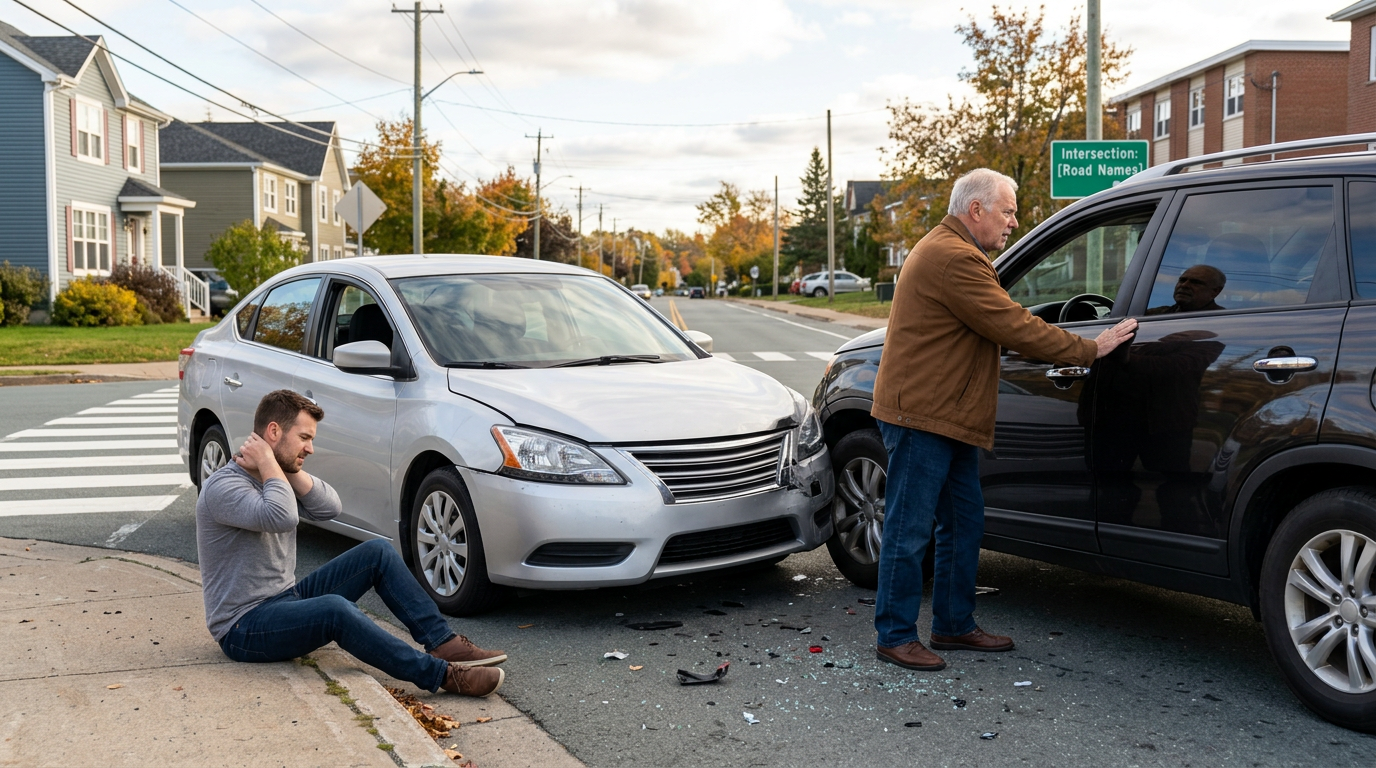
After a car crash, the bills can start before you have recovered enough to work. In Nova Scotia, a set of no-fault benefits known as Section B is built into every standard automobile insurance policy to help with exactly this. Because these benefits do not depend on who caused the collision, they can provide early support while a larger claim, if any, is still being worked out.
This article explains what Section B covers, who can claim it, and how it fits alongside a claim against an at-fault driver.
What Section B is
Section B accident benefits are a mandatory part of the standard Nova Scotia auto policy. “No-fault” means you can access them regardless of who was responsible for the crash. They are designed to cover immediate needs, such as medical treatment and a portion of lost income, so that an injured person is not left without support in the weeks and months after a collision.
Who is covered
Coverage is broader than many people expect. It generally extends to the policyholder, to passengers in the insured vehicle, and often to pedestrians and cyclists struck by the insured vehicle. That means a person who does not own a car can still access accident benefits after being hit while walking or cycling. If you are unsure which policy responds to your situation, a lawyer can help you identify the right one.
What Section B typically provides
The standard policy includes several categories of benefit. Medical and rehabilitation expenses are covered up to a set limit per person, typically up to $50,000, for reasonable and necessary treatment such as physiotherapy, medication, and other care not covered by the public health system, generally within a defined period after the accident. Income replacement provides a weekly payment to a person who cannot work because of the crash, commonly calculated at up to 80 percent of gross weekly earnings to a weekly maximum, for a defined number of weeks. The policy also includes death benefits for surviving family members and a funeral expense benefit. Exact amounts and conditions are set by the standard policy and can be updated over time, so it is worth confirming the current limits that apply to your claim.
How to apply, and why timing matters
To access Section B benefits, you must notify the insurer and submit the required application forms and supporting documents within the timelines the policy sets. These deadlines come up quickly after a crash. Notifying your insurer promptly, keeping every medical record and receipt, and following the treatment your care providers recommend all help ensure your benefits are paid without unnecessary delay. If a benefit is denied or cut off, that decision can often be challenged, and you do not have to simply accept it.
Keep good records from day one
Section B claims move more smoothly when the paperwork is complete and consistent. Keep a file with every medical report, prescription, receipt, and mileage record for trips to treatment, along with any documents showing your income before the crash, such as pay stubs or tax records. Follow the treatment your care providers recommend and attend your appointments, because gaps in treatment can be used to question the seriousness of an injury. If your insurer asks you to attend an assessment, it is reasonable to understand the purpose of that assessment before you go. Good records protect you if a benefit is later questioned or denied.
Section B is not the whole picture
Section B benefits are a floor, not a ceiling. They help with immediate costs, but they do not compensate you for pain and suffering or for the full extent of long-term losses. Where another driver was at fault, you may also have a separate claim against that driver for damages beyond what Section B provides. The two can work together: Section B supports you now, while the larger claim addresses the lasting impact of a serious injury.
A note on the minor injury cap
Nova Scotia limits the amount that can be recovered for pain and suffering in cases involving what the law defines as a “minor” injury. This cap is adjusted each year for inflation. It applies only to the pain-and-suffering portion of certain claims and does not limit medical benefits or income replacement. Whether an injury truly meets the legal definition of minor is often disputed, and a proper medical and legal assessment can make a significant difference to the outcome.
The team of lawyers at Diamond and Diamond have experience handling motor vehicle accident and accident benefit claims in Nova Scotia. Call our 24/7 injury hotline at 1-800-567-HURT (1-800-567-4878) or visit diamondlaw-ns.ca to speak with someone now. We offer free consultations and case evaluations, and our lawyers represent injured people across Nova Scotia, from Halifax to Sydney, Yarmouth, and beyond.