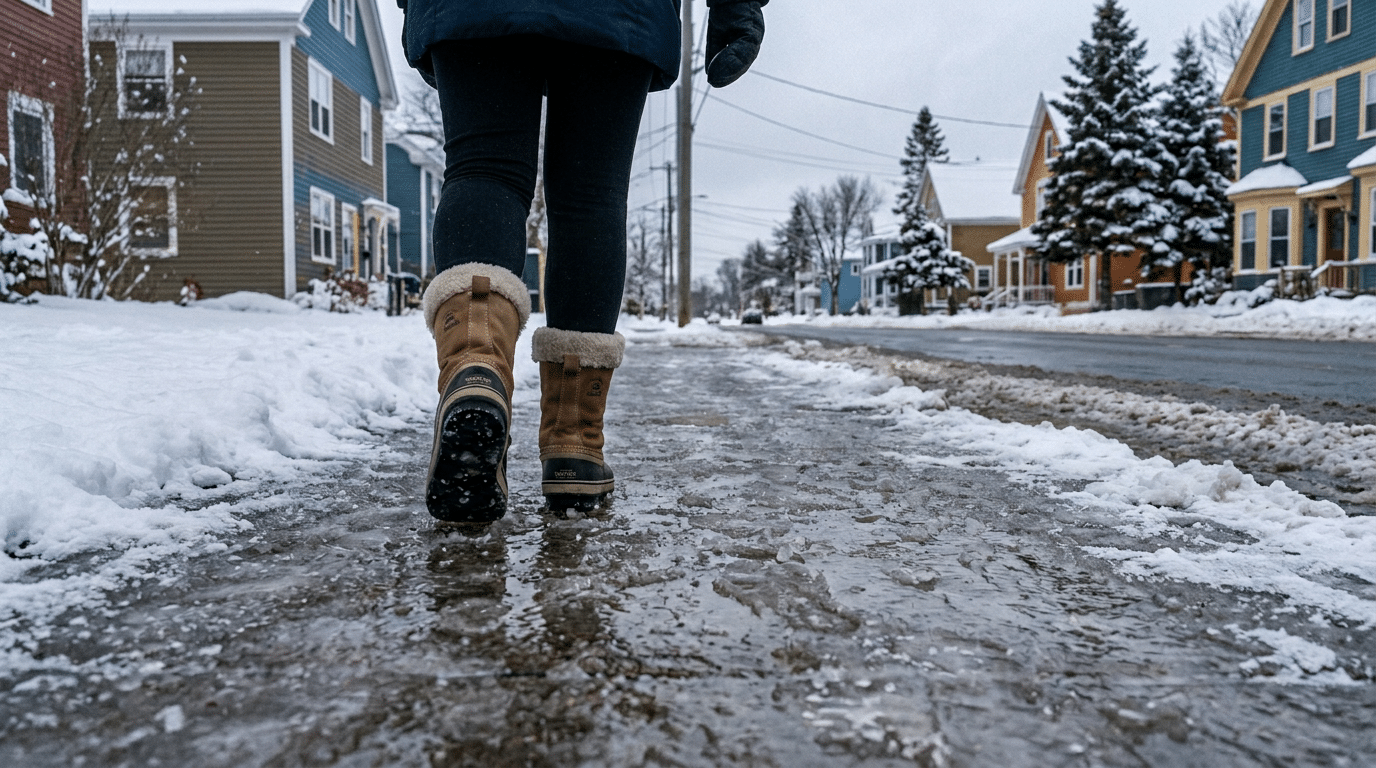
A Nova Scotia winter is hard on footing. Freeze-and-thaw cycles coat sidewalks, parking lots, and front steps in a thin, almost invisible layer of ice, and a single misstep can end in a broken wrist, a fractured hip, a back injury, or a concussion. These are not minor inconveniences. A serious fall can mean weeks off work, months of physiotherapy, and lasting pain.
If you were hurt after slipping on ice or snow, you may have the right to compensation. The key question is whether someone failed to keep the property reasonably safe. This article explains who can be held responsible, what you need to prove, and the steps that protect your claim.
Why winter falls happen so often here
Our coastal climate produces temperatures that hover around freezing for much of the season. Snow melts during the day and refreezes overnight, leaving black ice on surfaces that looked clear only hours earlier. Property owners know this pattern well, which is exactly why the law expects them to stay on top of it. A slippery patch that forms after a mid-winter thaw is foreseeable, not a surprise.
Who is legally responsible?
Nova Scotia’s Occupiers’ Liability Act sets the ground rules. An “occupier” is anyone who controls a property, such as a homeowner, a business, a landlord, or a property management company. Occupiers owe a duty to take reasonable care to keep people who come onto the property reasonably safe. That duty covers clearing snow, salting or sanding ice, and fixing hazards within a reasonable time.
Depending on where you fell, responsibility may rest with different parties. A grocery store or shopping centre is responsible for its entrances, walkways, and parking lot. A landlord is generally responsible for the common areas of a rental building, including shared stairwells and exterior paths. A private homeowner is responsible for their own steps and walkway. And when you fall on a public sidewalk or in a municipal park, a town or municipality may be the responsible party.
The standard is reasonableness, not perfection. An occupier is not automatically at fault every time someone falls. The question a court asks is whether the occupier did what a careful person in their position would have done given the weather, the time that had passed, and how obvious the hazard was.
What you need to prove
A successful claim generally shows three things: that the property owner owed you a duty of care, that they failed to meet the reasonable standard, and that this failure caused your injury. Evidence makes the difference. Photographs of the ice, the lighting, and the absence of salt or sand can establish the hazard. Weather records can show that conditions were forecast and foreseeable. A maintenance log, or the lack of one, can reveal whether anyone attended to the property that day.
Be aware of contributory negligence. If you were wearing unsuitable footwear, looking at your phone, or ignoring an obvious and marked hazard, a court may reduce your compensation to reflect your share of the responsibility. This does not necessarily end your claim, but it can lower the amount you recover.
Special deadlines when a municipality is involved
Claims that involve a town or municipality often carry shorter and stricter notice requirements than claims against a private owner. Under municipal legislation, you may need to give formal written notice of your claim within a limited window after the fall, and missing that window can jeopardize your right to sue. Because these deadlines are short and easy to overlook, it is wise to get legal advice quickly if you were hurt on a public sidewalk, in a municipal parking area, or in a public park.
What to do after a winter fall
First, get medical attention. A prompt medical record connects your injury to the fall and is important for both your recovery and your claim. Second, document the scene while it is fresh: take photographs of the ice and surroundings, note the exact location, the date, and the time. Third, report the fall to the property owner, store manager, or landlord and ask that a written incident report be made. Fourth, get the names and contact details of anyone who saw what happened. Finally, keep your footwear and any receipts or records related to your injury and expenses.
Compensation you may be able to claim
Depending on the severity of your injury, compensation can include reimbursement for medical and rehabilitation costs, lost income if you cannot work, out-of-pocket expenses, the cost of help around the home, and damages for pain and suffering. A person with a lasting injury may also recover for the effect on their future earning capacity and quality of life.
The team of lawyers at Diamond and Diamond have experience handling slip and fall claims in Nova Scotia. Call our 24/7 injury hotline at 1-800-567-HURT or visit diamondlaw-ns.ca to speak with someone now. We offer free consultations and case evaluations, and our lawyers represent injured people across Nova Scotia, from Halifax to Sydney, Yarmouth, and beyond.