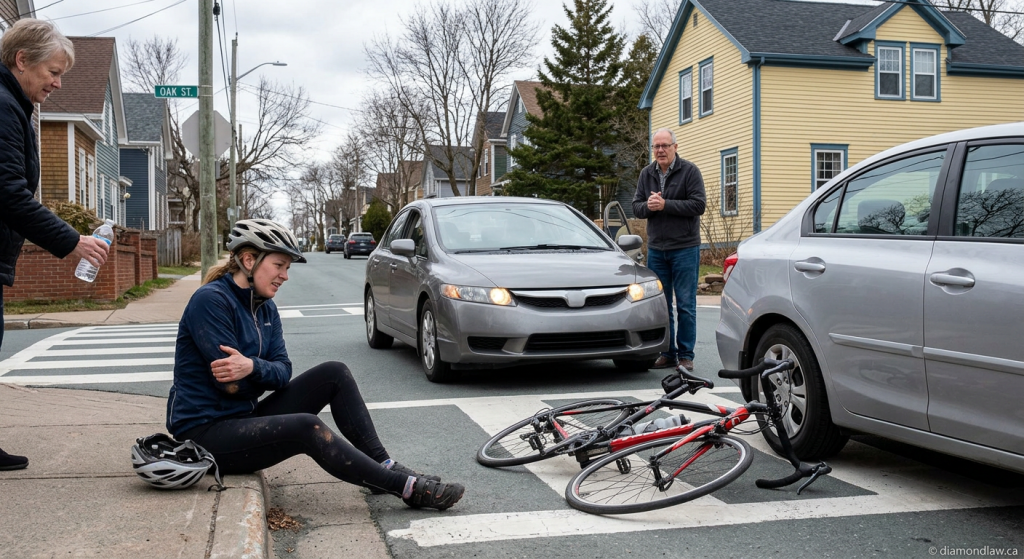
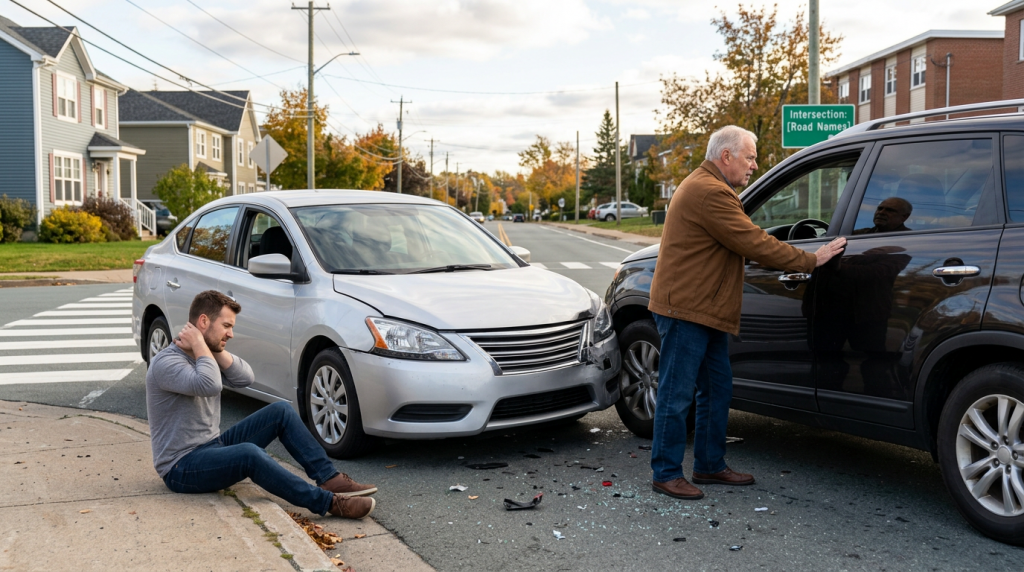
Nova Scotia's insurance system
Two claims can happen at the same time
Nova Scotia uses what is often called a "tort" system, combined with a set of mandatory no-fault benefits. In plain terms, that means two things can happen at the same time after a crash.
First, every standard Nova Scotia auto policy includes Section B accident benefits. These are "no-fault," so you can access them regardless of who caused the collision. They are designed to help with immediate needs such as medical treatment and a portion of lost income.
Second, because Nova Scotia keeps the right to sue, an injured person can also bring a tort claim against the at-fault driver. This claim can address losses that Section B does not cover, including pain and suffering and the long-term financial impact of a serious injury.
Understanding how these two parts fit together is central to any car accident claim in the province. Section B supports you in the weeks and months right after the crash, while a tort claim addresses the fuller and often longer-lasting consequences of a serious injury.
Section B accident benefits: help that does not depend on fault
Section B benefits are a mandatory part of the standard Nova Scotia auto policy. Because they are no-fault, they are available even if you were partly or fully responsible for the collision, as long as you meet the policy's requirements and deadlines. Coverage is often broader than people expect. It generally extends to the policyholder, to passengers in the insured vehicle, and frequently to pedestrians and cyclists struck by an insured vehicle. A person who does not own a car can still access accident benefits after being hit while walking or cycling.
The standard policy provides several categories of benefit. Medical and rehabilitation expenses are covered up to a set limit per person, typically up to $50,000, for reasonable and necessary treatment such as physiotherapy, medication, and other care not covered by the public health system, generally within a defined period after the accident. Income replacement provides a weekly payment to a person who cannot work because of the crash, commonly calculated at up to 80 percent of gross weekly earnings up to a weekly maximum, for a defined number of weeks. The policy also includes death benefits for surviving family members and a funeral expense benefit.
To access Section B benefits, you must notify your insurer and submit the required application forms and supporting documents within the timelines the policy sets. These deadlines come up quickly. Notifying your insurer promptly, keeping every medical record and receipt, and following the treatment your care providers recommend all help ensure your benefits are paid without unnecessary delay. If a benefit is denied or cut off, that decision can often be challenged, and you do not have to simply accept it.
Suing an at-fault driver: your tort claim
When another driver's negligence caused your injuries, you may have a separate claim against that driver for damages beyond what Section B provides. This is the part of the process that compensates you for the human cost of a serious crash, not just the immediate bills.
A tort claim generally must show three things: that the other driver owed you a duty of care, that they failed to drive as a reasonably careful person would have, and that this failure caused your injuries. Evidence matters here. Police reports, photographs of the vehicles and the scene, witness statements, medical records, and documentation of your income before the crash all help establish what happened and what it has cost you.
Damages in a tort claim can include compensation for pain and suffering, past and future loss of income, loss of earning capacity, out-of-pocket expenses, the cost of care and help around the home, and future medical and rehabilitation needs. For a person left with a lasting injury, the future portion of a claim, covering ongoing treatment and reduced ability to work, is often the most significant part.